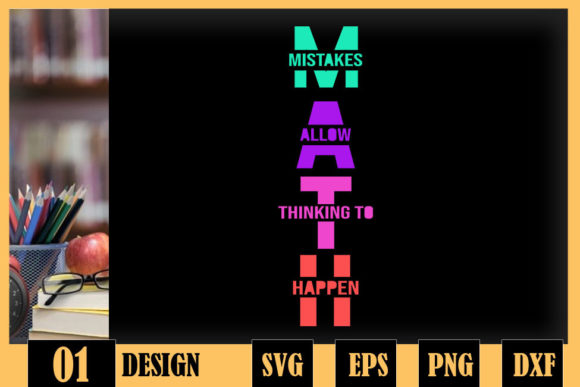
Math Mistakes Allow Thinking to Happen: A Unique Approach to Learning and Creativity
The concept of "Math Mistakes Allow Thinking to Happen" is more than just a catchy phrase—it's a philosophy that encourages learning through error. This idea suggests that mistakes are not just inevitable but essential in the process of understanding complex mathematical concepts. By embracing errors, students can develop critical thinking skills, foster creativity, and build resilience. This approach is particularly relevant in educational settings where the goal is not just to get the right answer but to understand the reasoning behind it.
What Makes Math Mistakes Allow Thinking to Happen Distinct?
Unlike traditional teaching methods that often focus on correcting mistakes, "Math Mistakes Allow Thinking to Happen" takes a different path. It emphasizes the value of the thought process rather than just the final result. This distinction is crucial because it shifts the focus from fear of failure to curiosity and exploration. When students are encouraged to make mistakes, they become more engaged in their learning and are more likely to take risks and try new strategies.
This approach also aligns with modern educational theories that advocate for a growth mindset. According to psychologist Carol Dweck, individuals who believe their abilities can be developed through dedication and hard work are more likely to achieve success. By allowing mistakes, educators can help students adopt this mindset and view challenges as opportunities for growth.
Comparing Math Mistakes Allow Thinking to Happen with Other Approaches
When comparing "Math Mistakes Allow Thinking to Happen" with other educational approaches, it's important to consider how each method addresses the role of mistakes in learning. Traditional methods often prioritize accuracy and efficiency, which can lead to a fear of making errors. In contrast, this approach encourages a more exploratory and experimental learning environment.
For instance, some educational programs emphasize rote memorization and standardized testing, which may not allow for the same level of creative thinking. While these methods can be effective for certain types of learners, they may not cater to those who benefit from a more hands-on, mistake-friendly approach. "Math Mistakes Allow Thinking to Happen" offers an alternative that can complement or even replace these traditional methods in specific contexts.
Best-Fit Situations for Math Mistakes Allow Thinking to Happen
This approach is particularly beneficial in classrooms where students are encouraged to collaborate and share their ideas. When students work together, they can learn from each other's mistakes and gain new perspectives. This collaborative environment fosters a sense of community and supports the idea that mistakes are part of the learning process.
Additionally, "Math Mistakes Allow Thinking to Happen" is well-suited for project-based learning, where students tackle real-world problems. In such settings, the focus is on solving complex issues rather than simply finding the correct answer. This method allows students to explore multiple solutions and reflect on their decision-making processes, leading to deeper understanding and improved problem-solving skills.
Limitations and Tradeoffs
While "Math Mistakes Allow Thinking to Happen" has many advantages, it is not without its limitations. One potential tradeoff is the need for careful guidance from educators. Without proper support, students may become frustrated or overwhelmed by the uncertainty of the learning process. It is essential for teachers to provide a structured framework that balances freedom with direction.
Another consideration is the time required to implement this approach effectively. Encouraging students to make and learn from mistakes can be time-consuming, especially in environments where standardized testing and curriculum requirements take precedence. Educators must weigh the benefits of this method against the constraints of their teaching context.
When to Choose Math Mistakes Allow Thinking to Happen
"Math Mistakes Allow Thinking to Happen" is an excellent choice for educators looking to create a more inclusive and dynamic learning environment. It is particularly suitable for students who thrive in open-ended, exploratory settings and for those who may struggle with traditional methods of instruction. By fostering a culture that values effort and perseverance, this approach can help students develop a lifelong love of learning.
However, it may not be the best fit for all situations. In contexts where speed and accuracy are paramount, such as in certain technical fields or high-stakes testing environments, a more structured approach might be more appropriate. Educators should consider the specific needs and goals of their students when deciding whether to adopt this method.
Realistic Examples and Practical Comparisons
Consider a classroom where students are working on a math problem that requires them to think creatively. Instead of immediately correcting a student's mistake, the teacher might ask guiding questions to help the student identify where they went wrong and what they could do differently. This interaction not only addresses the mistake but also reinforces the importance of the thinking process.
In contrast, a traditional approach might involve the teacher providing the correct answer and moving on to the next problem. While this method can be efficient, it may not offer the same depth of learning or engagement. "Math Mistakes Allow Thinking to Happen" provides a more nuanced and interactive way to address errors, leading to better long-term outcomes for students.
Conclusion
"Math Mistakes Allow Thinking to Happen" offers a valuable perspective on the role of mistakes in the learning process. By emphasizing the importance of the thought process, this approach encourages students to embrace challenges and develop critical thinking skills. While it may not be the best fit for every educational setting, it provides a powerful alternative to traditional methods that prioritize accuracy over exploration.
For educators and students alike, this philosophy can lead to a more engaging and meaningful learning experience. By creating an environment where mistakes are seen as opportunities for growth, we can foster a generation of thinkers who are resilient, curious, and capable of tackling complex problems.